
The French Defense: A Stubborn Wall Against 1.e4
Origins of the French Defense
The French Defense is one of the most time-honored responses to 1.e4, beginning with the moves 1.e4 e6. While the Sicilian and Caro-Kann might dominate modern databases, the French has never gone out of style. It has an identity that is both distinct and enduring—a defense that values resilience over aggression and counterplay over chaos.
The name “French Defense” dates back to 1834, when a correspondence match was held between players from London and Paris. The French side employed 1…e6 successfully, and the opening became known as the French Defense in their honor. From that early recognition, it developed a strong theoretical foundation and earned a reputation as one of the most principled ways to meet 1.e4.
Throughout history, many greats have trusted the French in key games. Mikhail Botvinnik and Viktor Korchnoi famously relied on it in world championship play, and even Magnus Carlsen has turned to it in elite tournaments when he wanted a durable yet dynamic setup. Its staying power comes from its balance: the French rarely collapses under pressure, and it gives Black chances to fight back on their own terms.
The Central Idea
At its core, the French Defense is about controlling the center indirectly. After 1.e4 e6 2.d4 d5, Black immediately challenges White’s central pawn on e4. If White pushes with e5, Black allows themselves to be squeezed for space but gains a firm defensive structure. The plan is not to fight for the center immediately but to undermine it later.
This pawn structure gives the French its trademark personality. Black’s pawns on e6 and d5 form a sturdy chain that is difficult to break, but it also blocks in the light-squared bishop on c8. This bishop, sometimes jokingly referred to as “the French bishop,” is often the bane of the defense, sitting passively until Black finds a way to free it. However, the French player accepts this trade-off because the rest of the position is sound and full of potential counterplay.
In most French structures, White enjoys more space and often tries to create pressure on the kingside, while Black looks for counterchances on the queenside or in the center. Pawn breaks like c5 and f6 are essential themes. These moves challenge White’s pawn chain from the base, trying to erode its foundation and free up the position for Black’s pieces.
The beauty of the French is how it teaches strategic patience. Unlike some openings that rely on memorized tactics or quick attacks, the French asks for understanding. The best French players know when to wait, when to challenge, and when to strike—qualities that often define mature chess.
Common Variations
Over time, several main branches of the French Defense have developed, each with its own flavor and plans.
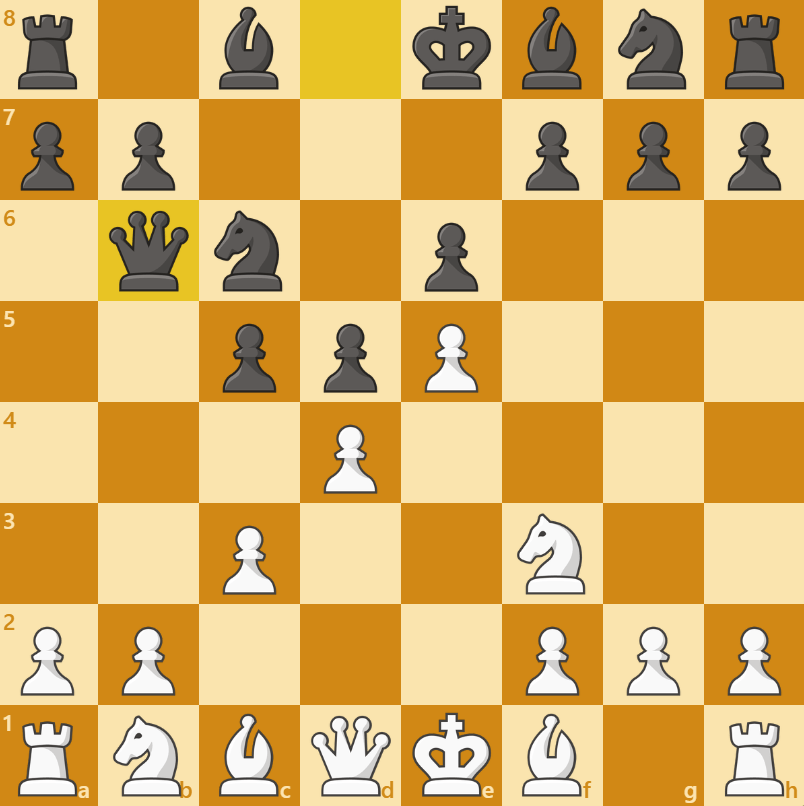
The Advance Variation begins with 3.e5, the most direct way for White to claim space. This leads to a closed position where White tries to expand on the kingside while Black looks for counterplay with c5 and sometimes f6. In this structure, Black’s goal is to attack the base of White’s pawn chain at d4, while simultaneously developing their pieces harmoniously behind their pawns. It’s a slow, strategic duel where every pawn move matters.
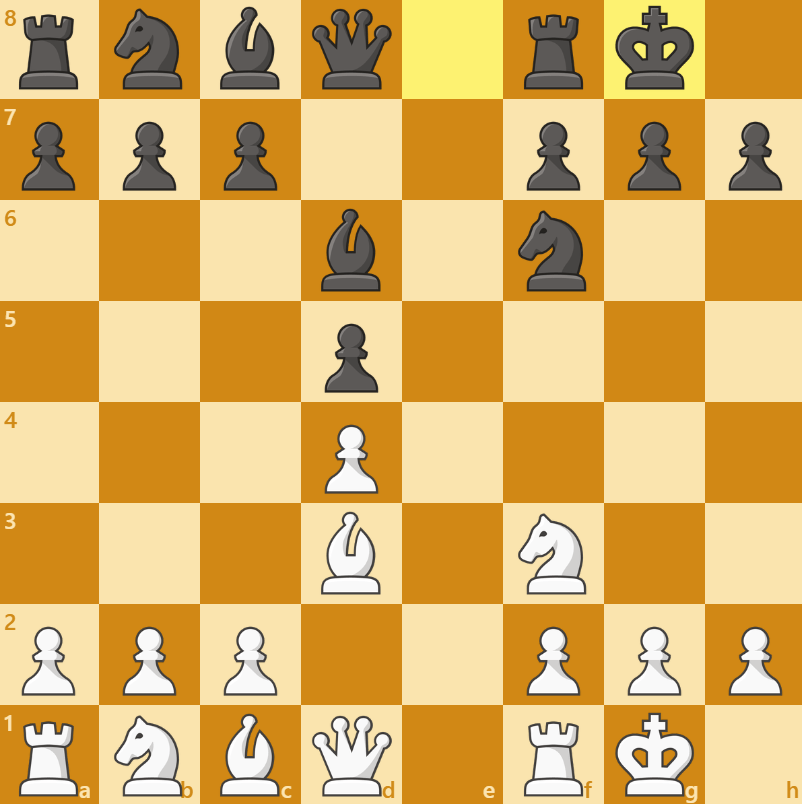
The Exchange Variation arises after 3.exd5 exd5. It looks symmetrical at first glance, but it often turns into a test of understanding rather than raw calculation. Because the position is balanced, both sides must create their own imbalances through piece placement and timing. The Exchange can lead to quiet, positional games or sudden tactical skirmishes depending on how both players approach it.
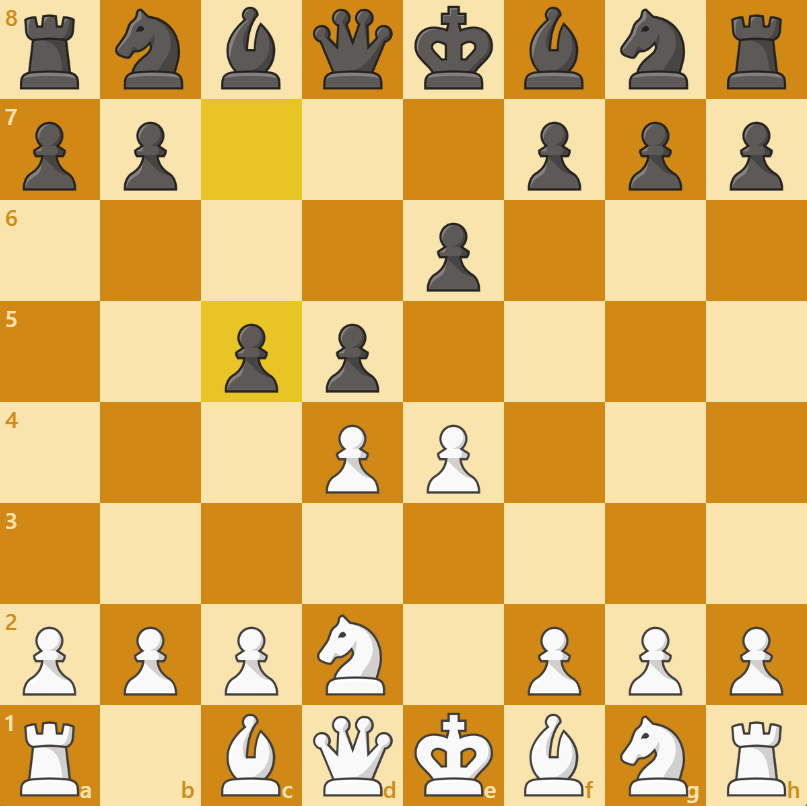
The Tarrasch Variation (3.Nd2) is a flexible and practical choice for White. By avoiding the pin that comes after 3.Nc3 Bb4, White keeps their center solid and prepares to recapture on e4 with the knight if needed. This variation tends to lead to more open positions and is favored by players who prefer clarity over complication.

The Classical Variation (3.Nc3 Bb4) is the most traditional line and often the sharpest. By pinning the knight, Black increases pressure on d4 and sets the stage for rich, complex middlegames. From here, the play can branch in many directions—some positional, some tactical. This variation has been explored in countless world championship matches, showing how flexible and deep the French can be.
Each of these systems highlights a different side of the French Defense’s personality. Some are sharp, some are slow, but all are rooted in the same strategic backbone: solid defense first, well-timed counterattack second.
Strategic and Psychological Appeal
The French Defense isn’t for everyone, and that’s part of its charm. It attracts players who don’t mind cramped positions if they come with long-term safety. It’s ideal for those who value structure, coordination, and delayed gratification. The defense often feels like a tug-of-war where White’s space advantage is tested against Black’s durability and counterpunching power.
For many, the appeal of the French is psychological as much as positional. It frustrates attacking players. Someone who loves open Sicilian-style games often finds the French uncomfortable, since the pawn structure limits early tactical chaos. Black gets to dictate the tone of the game, choosing when to open lines and when to keep things closed.
It’s also a defense that grows with you. Beginners can learn the basic pawn structures and plans, while advanced players can dive into its subtle variations and long-term endgame themes. The French teaches valuable lessons about pawn tension, space control, and the art of waiting for the right moment to counterattack.
Who Should Play the French Defense
The French Defense suits players who prefer strategy over speed and who enjoy the feeling of being unshakable in defense. If you like to slowly squeeze your opponent’s weaknesses and rely on solid positional principles, this opening will feel like home. It’s not about instant equality or quick fireworks; it’s about constructing a fortress that can later turn into a launching pad for counterplay.
Players who enjoy openings like the Caro-Kann or Slav Defense often find the French appealing for similar reasons. It’s practical, reliable, and never truly refuted. Once you understand its key pawn breaks and common plans, you can play it for a lifetime without worrying that theory will leave it behind.
The French rewards discipline, foresight, and patience. It is a teacher of chess fundamentals, showing how pawn structure dictates plans and how flexibility often wins over immediate aggression. For the right kind of player, it’s not just a defense but a philosophy—one that says you don’t have to rush to fight; you just have to be ready when the right moment comes.
 Chess is Hard