One of the best parts of a new hobby is getting the best gear for the job. Chess is no exception.
Whether you’re new to the game or looking for a gift for someone who is, these chess sets are perfect for beginners.
Even though chess has been around for centuries, chess sets have continued to evolve. There are now chess sets for every players needs. Let’s dive into the top sets for beginners as they just get started in this hobby.
As an Amazon Associate I earn from qualifying purchases.
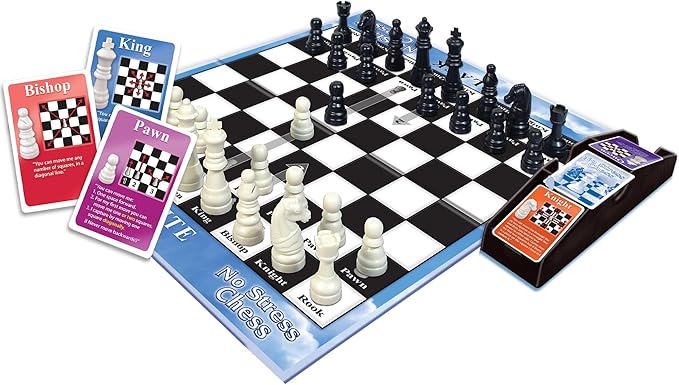
5. No Stress Chess by Winning Moves Games USA
The No Stress Chess set by Winning Moves Games USA is the ideal gift for beginner chess players. This set removes the stress from learning how to play chess and remembering all the rules with its unique and helpful queues.
On one side of the board, you’ll find piece names and arrows indicating how each piece moves. When you’ve mastered these concepts, flip to the other side of the board for a more challenging experience without the guides. A set of cards with visual diagrams showing how each piece moves is also included with the set.
4. Talking Chess Acadamy II, AI Voice Coach Chess Set
The future is here. No need for a chess coach or even an opponent with this AI-powered chess board. The optional chess coach will speak with you as you play, responding to your moves and providing tips as you go.
With training puzzles, grandmaster games, and an adjustable difficulty level from 800-2200+ Elo-based strength, this set is helping everyone, from beginners to experts, improve at chess.
The Chess Made Simple set by Spin Master Games features a detailed chess board with helpful labeling. Players will find helpful queues for where pieces go and how they move on the set itself.
Along with the labeling, the set comes with learning cards featuring the rules, helpful tips, and descriptions of how each piece moves.
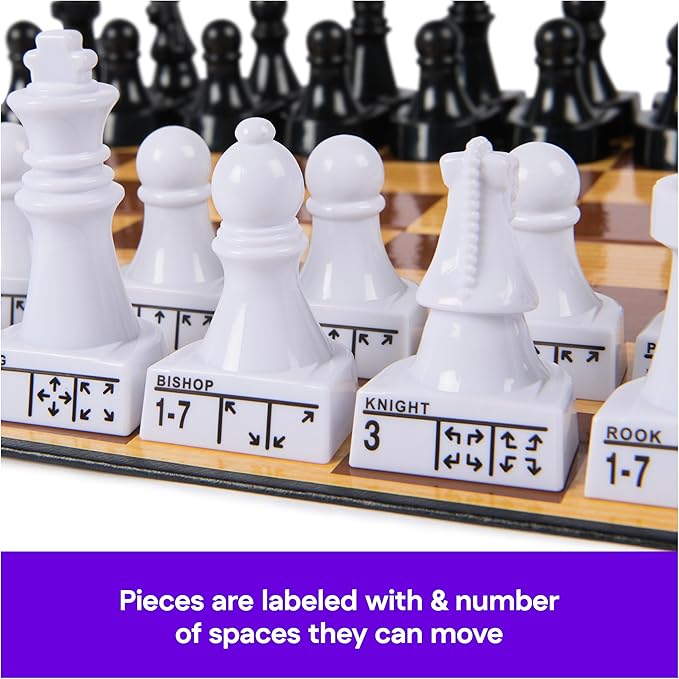
2. Chess Teacher: A Set for Learners by Spin Master Games
The Chess Teacher set is specifically designed for beginners and/or regular players who just can’t seem to remember how the knight moves. Each piece features a large label showing which direction it moves and how many spaces.
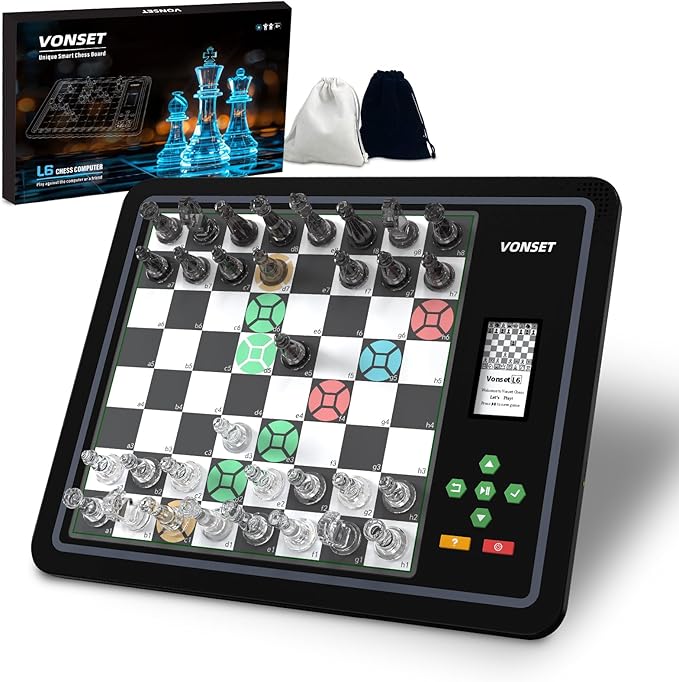
Rounding out the best chess boards for beginners, we have the Unique Smart Chess Board by Vonset. This chess set makes the perfect gift for the dedicated chess beginner in your life. Light up features allow users to play and improve solo against a chess computer.
The engaging experience of this light-up chess set make it the perfect set for beginners. Not only will they get to learn as they play, with training modes and puzzles available, but they’ll have fun doing it.
While it can be difficult to get started, chess is a highly rewarding, fun and cognitively beneficial hobby in the long run. Whether you’re shopping for you or a loved one, these beginner chess boards will set you up for success in your chess endeavors.
A beginner chess player doesn’t need to memorize 20-move sequences of theory. Instead, aim for openings that teach you the fundamentals: developing your pieces, controlling the center, and keeping your king safe, while remaining simple, intuitive, and relatively risk-free from the start.
In this post, we’ll provide a three-opening repertoire perfect for the beginner: the Stonewall Attack, the King’s Indian Defense, and the French Defense.
The Stonewall Attack teaches the importance of central space in the opening while providing intuitive development and sharp yet straightforward attacks. Meanwhile, the two Black openings prepare you with forceful replies against White’s two most common opening moves.
The Stonewall Attack
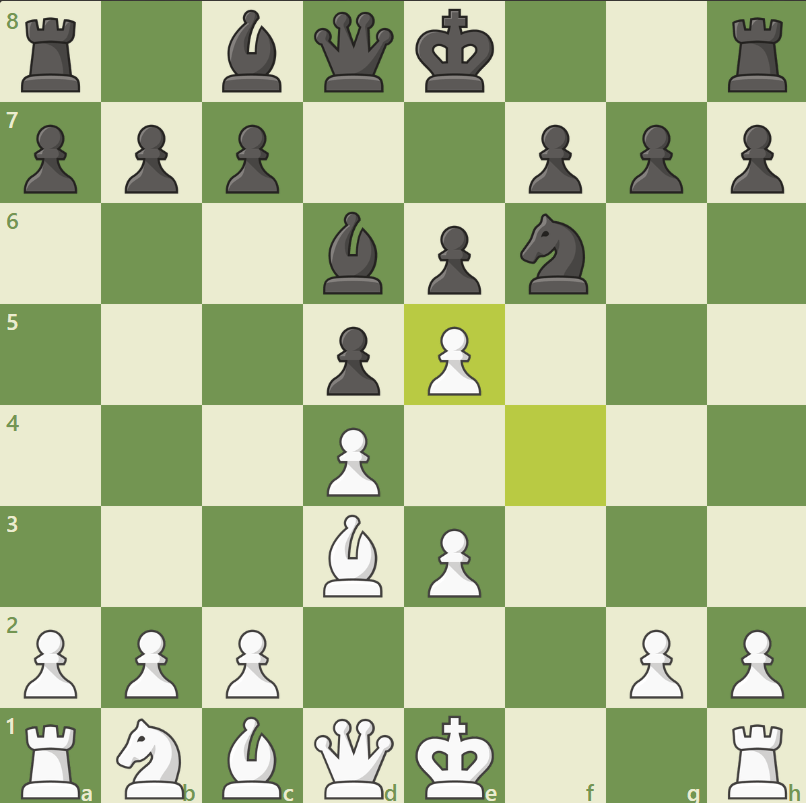
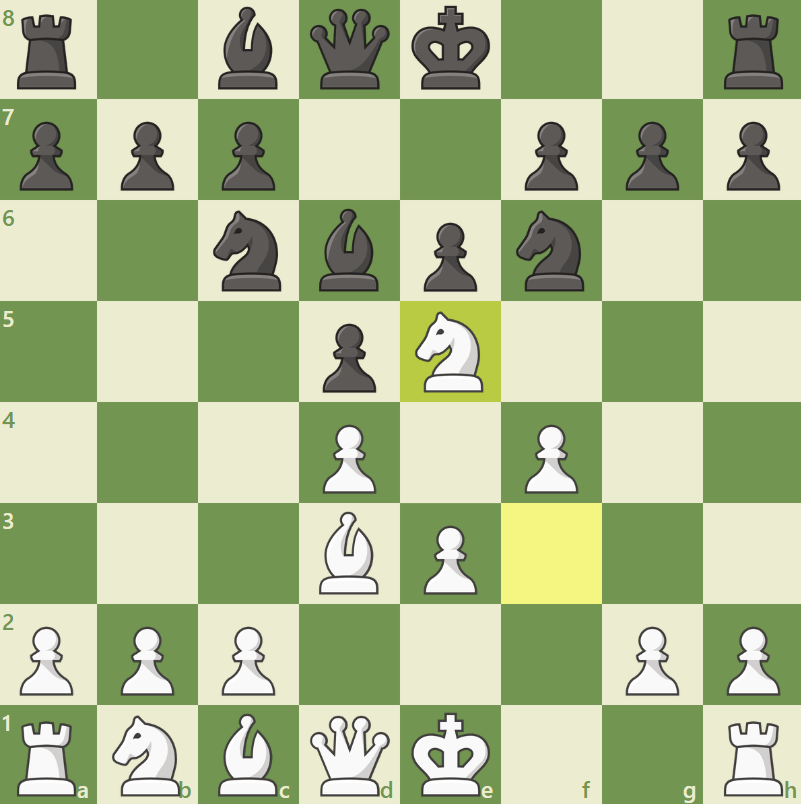
The Stonewall Attack is excellent beginner-friendly opening. It’s not as popular as the London System with d4, but it shares the same quality of being straightforward and consistent. The Stonewall usually begins:
d4, followed by 2. e3, 3. f4, 4. Nf3, and 5. Bd3.
The defining feature is the “stonewall” pawn structure: pawns on d4, e3, f4, and c3. This creates a solid wall in the center, giving White lots of control over the dark squares, especially e5, where the knight often enjoys a happy outpost.
At a beginner level, Black will often trade off the e5 knight early on, sometimes hanging a pawn fork in the process if they take the wrong way.
The Stonewall is especially useful for beginners because it gives you a clear plan: build the wall, develop behind it, and attack on the kingside. Unlike more theoretical openings, you don’t need to memorize long lines. Understanding the pawn structure and typical piece placements is enough to get started.
The King’s Indian Defense
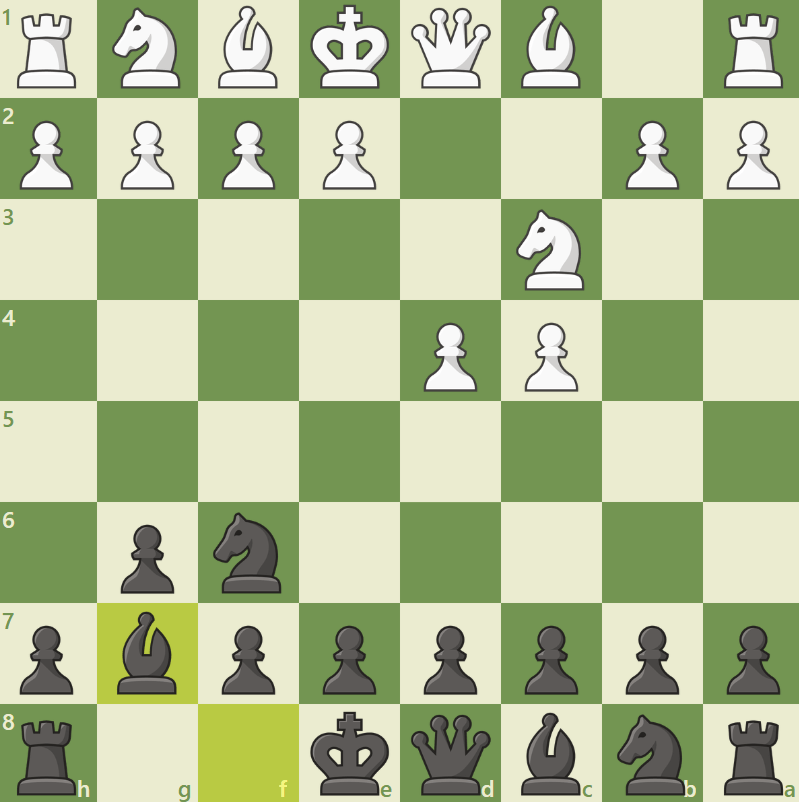
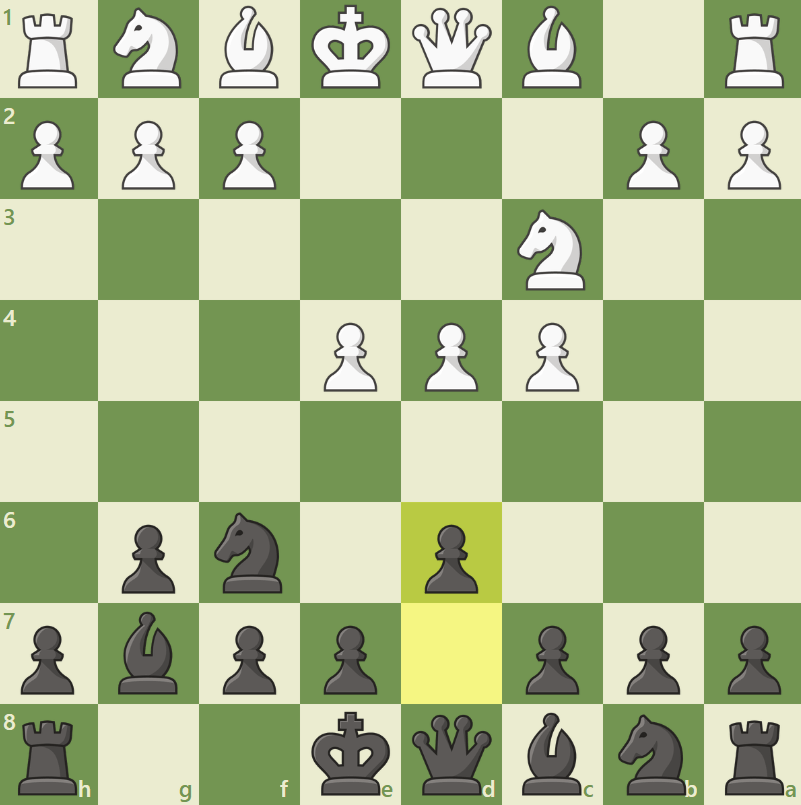
Now let’s switch to a defensive option for Black. The King’s Indian Defense (KID) is a great choice if you want to meet 1. d4 with something dynamic and aggressive. It starts with:
d4 Nf6
c4 g6
Nc3 Bg7
e4 d6
Here, Black allows White to build a strong pawn center but plans to counterattack later. The typical pawn structure involves Black playing e5 or c5, while fianchettoing the bishop to g7. The King’s Indian is all about flexibility. You can sit back and then strike at the right moment.
For beginners, the KID is helpful because it teaches patience and counterplay. You’ll learn that you don’t always have to grab the center immediately. Instead, you can let your opponent take space and then undermine it. It also exposes you early to ideas of pawn breaks, king safety, and sharp middlegame attacks.
The French Defense
Against 1. e4, your defensive opening in this repertoire is the French Defense. It begins:
e4 e6
d4 d5
The French Defense is solid and strategic. Black immediately challenges White’s center with d5. A key feature of the French is the pawn chain: if White plays e5, Black will often respond with c5, attacking the base of White’s pawn structure.
The French teaches beginners important lessons about pawn structure, particularly how locked centers affect play. In many French positions, play revolves around slow maneuvering, attacking on the wings, and well-timed pawn breaks. This makes it a great opening for developing patience and understanding strategic battles.
Tips for Learning Openings
Learning openings can feel daunting, but if you approach them the right way, you’ll improve much faster and avoid wasting time on endless memorization. Here are some practical tips to help you get the most out of your chosen opening.
1) Watch/Read Content on Your Opening of Choice
We live in the golden age of chess content. Whether you prefer YouTube videos, Twitch streams, books, or online courses, there are countless resources that break down openings step by step. Watching strong players play your opening can help you understand not only what moves to play, but also why those moves are played.
Start with beginner-friendly guides. Don’t worry about learning ten different variations right away. Focus on the core setup, the basic plans, and the pawn structures you’ll see over and over again.
2) Play a Lot Online to Get Familiar with Your Opening
The fastest way to improve at any opening is to actually play it. Pick an opening, commit to it for a stretch of games, and see how your opponents respond. Online chess platforms like Chess.com and Lichess make it easy to get hundreds of games in, especially at shorter time controls.
If you’re struggling to figure out which color/opening you enjoy, try playing against a computer first. The computer won’t care if you experiment, and you’ll get a chance to test the waters. After some trial and error, you’ll naturally gravitate toward openings that feel comfortable to you.
The key is repetition—playing your opening again and again until it becomes second nature.
3) Learn a Few Variations, but Don’t Worry Too Much About Memorization
One of the biggest mistakes beginners make is trying to memorize dozens of moves without understanding them. The truth is, most of your opponents won’t follow the main line theory anyway. Instead, you should focus on basic principles:
Development: Get your knights and bishops out quickly. Don’t waste time moving the same piece multiple times early unless necessary.
Central Space: Try to control the important squares in the middle of the board (d4, d5, e4, e5). The player with more central influence often has more options.
King Safety: Don’t forget to castle! Leaving your king in the center too long is a recipe for disaster.
If you understand these fundamentals, you’ll always have a decent position—even if your opponent takes you “out of book” early. As you gain experience, you can add a few variations and tactical motifs to your knowledge, but keep your focus on the basics.
Chess has fascinated players for centuries, from casual enthusiasts pushing pieces on a park bench to grandmasters competing for world titles. At first glance, it looks simple—each player starts with the same pieces, the same board, and the same rules. Yet, as anyone who has ever tried to improve at chess can tell you, the game is extraordinarily difficult. But why is chess so hard? Let’s break down the main reasons.
Causes of Chess Difficulty:
1. The Sheer Number of Variations
One of the biggest reasons chess feels impossible at times is the sheer number of possibilities in each position. After the very first move, White has 20 options, and Black has 20 responses, creating 400 different board positions after just one move each. By move three, the number of possible positions is already in the tens of thousands.
This explosive branching continues throughout the game, leading to an estimated 10^120 possible variations. That number is unimaginably large—far greater than the number of atoms in the observable universe. Unlike checkers, which has been solved by computers, chess remains unsolved because the game tree is just too vast. This means humans must navigate uncertainty constantly, making decisions without being able to calculate everything.
2. The Complexity of Positions
Even if you narrow down the options, chess positions themselves can be mind-bogglingly complex. Some positions demand concrete tactical calculation—who wins if this knight takes that pawn? Other positions require long-term strategic thinking—should you advance your pawn now, or keep it as a barrier for later?
The most difficult aspect is that there isn’t always one “right” move. A move might be playable in one position but a blunder in another that looks nearly identical. Recognizing these subtleties requires experience, pattern recognition, and often, intuition that develops only after thousands of games and studies.
3. The Burden of Studied Openings
As you improve at chess, another layer of difficulty emerges: openings. Beginners may happily push pawns forward and develop pieces without concern for theory, but once you play stronger opponents, you quickly realize that openings are deeply studied, memorized sequences of moves.
Professional players can memorize dozens of lines 20–30 moves deep, knowing not only the moves but the reasoning behind them. For casual players, this can feel daunting. You may learn the first 6–10 moves of your favorite opening, only to be surprised when your opponent plays something slightly different. Suddenly, you’re on your own, and the pressure is on. This makes openings both a necessary tool and a frustrating challenge for anyone trying to climb the chess ladder.
4. The Overwhelming Options as a Beginner
For new players, one of the hardest parts of chess is simply the overwhelm of options. On every turn, you have dozens of possible moves: pawns can move, knights can jump, bishops can slide, rooks can control files, and your queen can zip across the board. Without experience, it’s hard to know what matters. Should you grab that free pawn? Should you move another piece out? Should you castle?
This feeling of “analysis paralysis” is common. Beginners often feel like they’re drowning in choices, not knowing how to evaluate which move is best. Over time, as you learn basic principles—develop your pieces, control the center, protect your king—the decision-making gets easier, but those early games can feel overwhelming.
5. The Difficulty Increases as You Climb
Chess is unique in that the better you get, the harder it becomes. At the beginner level, many games are decided by blunders—players simply leave pieces hanging. Improve a little, and your opponents stop giving you free material, forcing you to calculate actual tactics.
At intermediate levels, you must learn positional play: pawn structures, weak squares, open files, outposts for knights. It’s not enough to just avoid blunders—you need to understand why one setup is stronger than another, even without immediate tactics. At advanced levels, everything becomes more precise: calculations run deeper, strategy becomes more nuanced, and small mistakes can be punished mercilessly.
In short: the better you get, the more demanding chess becomes.
6. The Requirement of Deep Focus
Unlike casual games where you can half-watch TV while playing, serious chess demands intense concentration. A single moment of distraction can ruin hours of careful play. You may spend 15 moves building up a strong position, only to make one careless move that collapses your defenses.
This demand for focus makes chess mentally exhausting. Long games, especially classical ones that last several hours, push players to the limits of endurance. Staying sharp under pressure is one of the hardest parts of becoming a strong player.
7. The Time Commitment
Finally, chess requires an enormous time investment to improve. To get “good” at chess—say, strong club level—often takes years of consistent study and play. Grandmasters typically start young and devote thousands of hours to mastering tactics, openings, endgames, and positional play.
For adults balancing work, school, or family, finding the time to study chess in depth can be difficult. Improvement is possible at any age, but the road is long, and progress can feel painfully slow. This time commitment often discourages beginners who expect quick results.
Where to Begin:
So yes, chess is hard. But that’s also what makes it rewarding. The complexity, the struggle, the constant growth—all of it is part of the beauty of the game. If you’re ready to start your journey, here are some practical first steps:
1. Create an Online Account
One of the best ways to dip your toes into chess is by creating an account on platforms like Chess.com or Lichess.org. Playing online removes some of the fear of sitting across from a human opponent in person. You can practice against the computer, which won’t judge you, or against strangers worldwide, which helps you get comfortable making mistakes in a low-pressure environment.
2. Watch Chess Content
We live in a golden age of chess content. YouTube, Twitch, and even Netflix have brought chess to the mainstream. Watching streamers, grandmaster commentary, or online tournaments helps you see how stronger players think about the game. Even casual content can teach you opening ideas, tactical motifs, and strategic concepts in an entertaining way.
3. Utilize Free Study Materials
There are countless free resources to help you improve:
Tactics trainers sharpen your calculation skills.
Opening databases show you the most common moves.
Endgame tutorials teach you how to convert a winning position.
Taking just 15–20 minutes a day to study with these tools can yield noticeable improvement over time.
4. Join Your Local Chess Community
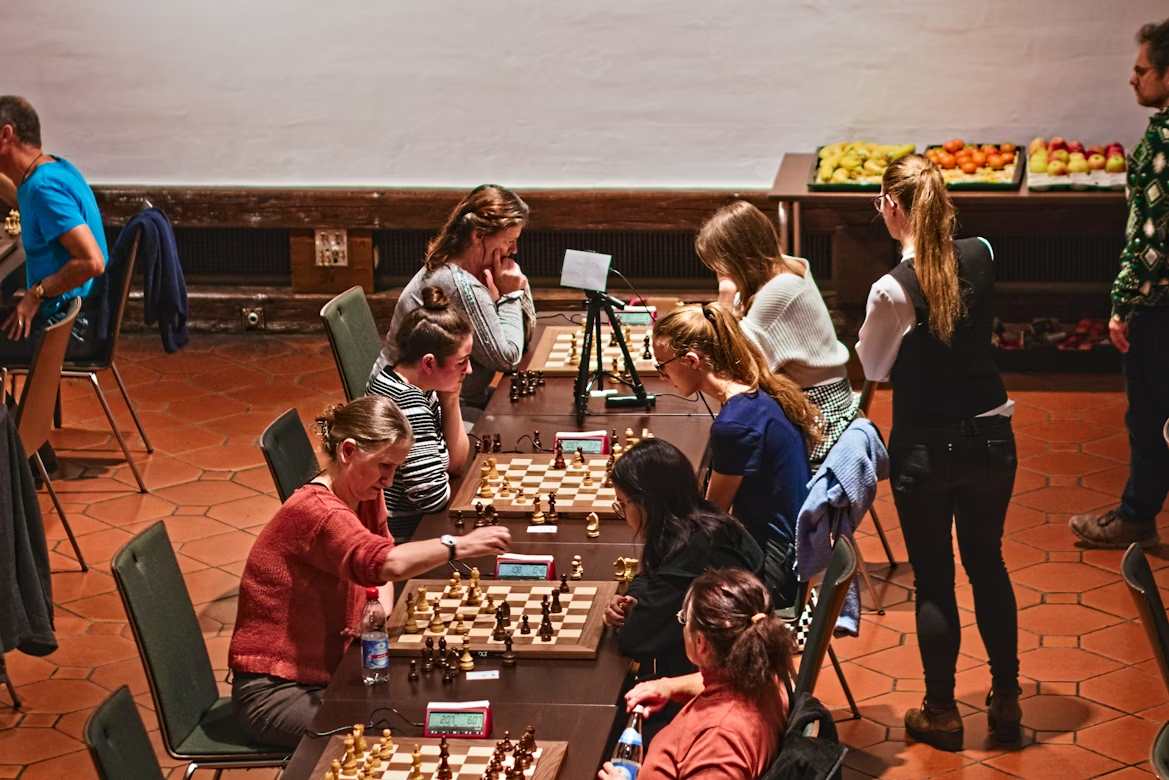
Finally, nothing replaces the experience of playing in person. Check if your city has a local chess club, a community center with regular meetups, or even casual games at parks or cafes. Meeting other players not only sharpens your skills but also keeps you motivated. Chess can be a lonely pursuit if done entirely online, but sharing the experience with others makes the journey more enjoyable.




 Chess is Hard