Tag: chess

  • The Chess Community Demands Justice for Daniel Naroditsky

    The Chess Community Demands Justice for Daniel Naroditsky

    The Chess Community Demands Justice for Naroditsky

    Prior to the beloved commentator and GM’s passing on October 19, 2025, Daniel Naroditsky was barraged by cheating allegations from former chess world champion Vladmir Kramnik. The chess community is now banding together to find justice for Naroditsky and others who have faced similar relentless attacks from Kramnik.

    Sore Loser: Cheating Allegations from Kramnik

    One year to the day prior to Naroditsky’s death, on October 19, 2024, Kramnik posted a video entitled “Answering Danya ‘The Wall,’” in which he doubled down on previous allegations of Naroditsky cheating during a livestream by using at a chess engine. He showed a video posted by Naroditsky titled, “Facing Off Against Kramnik and WINNING!! | Titled Tuesday | GM Naroditsky,” from May 17, 2023 and alleged that Naroditsky’s eye movements on stream during the game were suspicious.

    He stated in his video “[Danya is]clearly sitting in front of laptop, and the camera goes a little up, so it’s more or less on the level of the camera. Danya is looking at the monitor, it’s very obvious, yeah?”

    He continued the video and paused it after an almost indiscernible eye movement from Naroditsky on-screen. He said, “This is definitely way up [from] the monitor. It is looking at the wall. It is maybe a beautiful wall, but it’s like there are too many gazes, too many glances, at the wall, and many are very intense…You can ask a specialist in this field, but, you know, it’s like pretty obvious to me.”

    Kramnik’s allegations didn’t stop no matter what actions Naroditsky took to prove his innocence. He recorded detailed breakdowns of his streaming set-up, played immaculate in-person chess where cheating with an engine would be impossible, and even debated Kramnik in an interview. Nothing was ever enough to silence the Russian former champion.

    Lasting Impact of the Allegations

    Naroditsky fought for his reputation and name to be cleared for over a year while Kramnik and supporters continued to throw unfounded claims his way. On the UNFILTERED podcast with Dina Belenkaya on April 11, 2025, he discussed the impacts of Kramnik’s claims.

    Naroditsky had looked up to Kramnik as a child. Many have seen a photo of young Naroditsky with Kramnik after the young prodigy drew the former world champion in London. He said, “He was one of the people I looked up to… What broke my heart is that if Kramnik had talked to my latest coach, I have the greatest reverence for the world champion.”

    He continued, “I would rather (insert any horrible medieval punishment) than to cheat against the former world champion. Anybody who knows me knows this is something that I take very seriously…It broke my heart that this man thinks I have such a lack of moral integrity to such an extent.”

    While certain members of the chess community backed him, others remained silent or joined Kramnik’s side of the fight. In his interview on Belenkaya’s YouTube channel, Naroditsky said, “A lot of GMs behind the scenes were like ‘Let me grab my popcorn.’”

    Super GM Magnus Carlsen reflected after Naroditsky’s passing, “I don’t think that anybody thought that Naroditsky was cheating. In private I expressed that I was sorry for what he was going through and supported him. [I] probably should have done that publicly as well.”

    Community Outpouring of Support

    The chess community has not only expressed admiration, love, and fond memories of Naroditsky over the past few days, but they’ve banded together to see that Kramnik’s unfounded cyber-bullying campaigns meet justice as well.

    Chess streamer Nemo tweeted, “I’m calling on the FIDE EDC to remove Vladmir Kramnik from the FIDE record books, revoke his title, and disqualify his world championship. Chess is one of the most beloved games in the world and should be a place for kindness and inclusion.”

    President of FIDE Emil Sutovsky sparked backlash with his response, which dodged responsibility while placing blame on mourners of the deceased. He tweeted, “Now, all those who claim how dear Danya was to their heart, how good a friend they were, where have you been? What did you do? All these Kramnik attacks on Danya happened not this week or month. It was not like a shocking accusation, that killed Danya overnight.”

    After seeing the outrage this sparked, he followed up, “It was obviously not aimed at Danya’s close friends or God forbid family. I was referring to people who now refer to themselves as friends, but did very little to help. It did annoy me, and does annoy now. I never had a privilege to call Danya a friend, but I acknowledge that FIDE also could and should have done better.”

    Chess content creator and IM Levy Rozman reacted to the tweets from FIDE’s president in an impassioned video prior to leaving for the airport to attend Naroditsky’s funeral. He said, “I can’t believe this is the immediate response from the only people in the chess world who can maybe do anything about it… Please, we can’t let this go in vain… There needs to be justice.”


  • Mastering Chess Ratings: A Comprehensive Elo Guide

    Mastering Chess Ratings: A Comprehensive Elo Guide

    Mastering Chess Ratings: A Comprehensive Elo Guide

    Chess players love to talk about their Elo rating, that mysterious number next to their name that somehow defines how strong they are. But what exactly does it mean? And how can a single number measure such a complex game?

    In this post, we’ll unpack what Elo ratings actually represent, how they’re calculated, what affects them, and how you can use them to track your improvement without losing your mind over every win or loss.

    What the Elo Rating System Is

    The Elo system, named after physicist Arpad Elo, is designed to estimate a player’s skill level based on their results against other rated players. Unlike school grades, an Elo rating isn’t an absolute measure—it’s relative.

    Your rating doesn’t tell you how good you are in isolation; it tells you how good you are compared to others in the rating pool. If you consistently beat higher-rated opponents, your rating rises. If you lose to lower-rated players, it falls. Over time, the system zeroes in on your actual playing strength.

    Elo ratings are dynamic, meaning they’re meant to shift as you improve. Every rated game you play nudges that number closer to an accurate reflection of where you currently stand.

    How Elo Is Calculated

    At its core, Elo is a prediction model. Before every game, the system calculates your expected score—how likely you are to win, draw, or lose—based on the difference between your rating and your opponent’s.

    If you perform better than expected, your rating goes up. If you perform worse, it goes down. The size of that change depends on something called the K-factor, which determines how “volatile” your rating is. New players usually have a high K-factor, meaning their ratings swing widely until enough games establish consistency. Experienced players, on the other hand, have smaller rating changes because their results are more predictable.

    The basic formula looks like this:

    New Rating = Old Rating + K × (Actual Score – Expected Score)

    So if you were expected to score 0.4 against a stronger opponent but actually win (scoring 1.0), you’ll gain a solid chunk of rating points. But if you lose to someone you were expected to beat easily, you’ll drop more.

    What Elo Does—and Doesn’t—Measure

    The Elo system is one of the best ways we have to measure chess skill, but it’s not perfect. Ratings are relative, not absolute. A 1500-rated player online might play differently than a 1500 in an over-the-board federation. Some platforms experience rating inflation, meaning numbers gradually creep upward, while others experience deflation, where averages drop over time.

    More importantly, Elo doesn’t measure the quality of your play. You could outplay your opponent for 40 moves, blunder once, and lose the game—your rating won’t care that you played beautifully for most of it. It only tracks outcomes, not depth of understanding or creativity.

    It’s also worth remembering that your performance can fluctuate. Fatigue, confidence, and even time of day can influence results. A few off-days don’t define your true level. Instead, Elo averages things out in the long run.

    How to Use Your Rating Wisely

    Treat your rating as a mirror, not a verdict. It reflects how you’ve been performing lately, but it doesn’t define your potential.

    The best way to improve it isn’t by obsessing over points, but by focusing on consistent progress. Study your losses to identify recurring mistakes. Work on one area at a time, like tactics, endgames, or opening fundamentals. The more stable your play becomes, the steadier your rating will rise.

    You’ll also get better results by playing opponents near your level. Facing much weaker players won’t challenge you, and beating them yields minimal rating gain. Facing much stronger players might be educational, but constant losses can shake your confidence. Strike a balance that pushes you just beyond your comfort zone.

    Above all, play regularly. Elo becomes more accurate the more games you play.

    Chess Rating Tiers Explained

    To give you a sense of what different Elo ratings mean in plain language, here’s a general breakdown. Keep in mind that these ranges can vary between online platforms and official federations like FIDE or USCF.

    Rating RangeSkill LevelDescription
    0–799BeginnerJust learning how the pieces move and basic rules. Still working on avoiding blunders.
    800–1099NoviceUnderstands basic tactics like forks and pins. Can play simple openings and spot threats.
    1100–1399IntermediateSees 1–2 move combinations, starting to develop strategic thinking and positional awareness.
    1400–1699Advanced IntermediateHas a solid understanding of openings, tactics, and endgames. Can punish weak moves and build plans.
    1700–1999Skilled Club PlayerStrong tactical sense and positional play. Understands long-term plans and psychology of the game.
    2000–2299ExpertDeep theoretical knowledge and consistent accuracy. Can compete in strong regional tournaments.
    2300–2499MasterNear-professional level. Strong understanding of all aspects of chess and excellent calculation skills.
    2500+Grandmaster LevelAmong the top 1% of players worldwide. Competes in national and international events at elite levels.
  • 5 Best Chess Books for Beginners (2025)

    5 Best Chess Books for Beginners (2025)

    Top Chess Books for Beginners

    When you’re just starting out at chess, the number of books can be overwhelming. Some go deep into theory you’re not ready for. Others are so simple you might finish them without really improving. These five books strike a good balance — clear teaching, helpful exercises, enough guidance to level up without too much fluff or jargon. If you’re new or just getting serious about improving, these are some of the best.

    As an Amazon Associate I earn from qualifying purchases.


    1. How to Win at Chess by Levy Rozman

    What it offers:
    This book is built for players roughly from 0 to ~1200 Elo — total beginners through low-intermediate. There are two main parts: Part I for beginners (0-800), Part II for intermediate (800-1200). It covers everything from rules and piece movement to basic openings, simple endgames, tactics, and strategy. It also includes lots of diagrams, some color, and QR codes that link out to online content.

    What it does well:

    • The writing is very approachable — not assuming you know much, it explains in plain language.
    • Good structure: the chapters are ordered from very basic up through more advanced concepts. That helps build confidence.
    • The tactics section (especially the heuristic “CCA” — Checks, Captures, Attacks) is strong; many reviewers say that part shines.

    Best for: players who want a solid foundation, someone who knows little or nothing of chess, or someone who’s played casually and wants to get serious up to ~1200 Elo.

    Buy this on Amazon


    2. Bobby Fischer Teaches Chess

    What it offers:
    This one is a classic. It uses a programmed learning method, meaning you get a puzzle or question, you try to answer, if wrong the book explains why, then you try again. The focus is very much on basic tactics/checkmating ideas rather than the full spectrum of chess theory. It doesn’t require knowing standard chess notation: many diagrams and simple descriptions do the job.

    What it does well:

    • It’s excellent for absolute beginners who don’t even know forks, skewers, pins, etc. It builds pattern recognition in a very hands-on, immediate way.
    • Because of the immediate feedback loop (try, check, learn), it helps keep up motivation: you see success quickly.

    Best for: someone who is brand new, or a young learner, or someone who wants a gentle first exposure to what makes you win games tactically.

    Buy this on Amazon


    3. Winning Chess Exercises for Kids by Viktoria Ni

    What it offers:
    This is a workbook targetted mainly at children aged ~8-12, but actually useful for adults who like visual, exercise-based learning. It includes over 350 exercises, annotated diagrams, step-by-step instructions, growing difficulty, and explanations of what tactics and strategies look like in practice.

    What it does well:

    • Diagrams and visual explanations are strong. That’s especially helpful if you struggle with moving pieces in your head.
    • Exercises are fun, not dry: the puzzles are engaging and are structured so that they reinforce what you just learned.
    • The book doesn’t talk down to the reader. Even though for kids, many reviewers say an adult with basic knowledge still learns something.

    Best for: kids, teens, or adult beginners who prefer doing puzzles/exercises rather than reading dense explanations. Also good as a supplementary book.

    Buy this on Amazon


    4. The Chess Blueprint by Daniel Redford

    What I found & what seems to be promised:
    This one presents itself as a step-by-step system to transform how you think about chess: from mindset to analysis, to a more complete approach. It claims to help with everything from practical openings to tactical mastery.

    What it does well:

    • Good if you want a framework: not just “move this, then that,” but “why you move this” — more about thinking, planning, not just tactics.
    • Could be valuable for somebody who’s moved past just knowing the rules and wants to understand how to decide what to play.

    Best for: beginners who want something more than “just tactics” — someone wanting to think like a chess player, not only “what piece moves where.”

    Buy this on Amazon


    5. How to Play Chess for Beginners

    What it offers:
    This is one of the more basic guides, meant for people who are starting completely from scratch. It tends to cover the fundamentals: how pieces move, basic rules (castling, en passant, pawn promotion, check, checkmate), simple tactics, maybe some ideas about openings and basic strategy.

    What it does well:

    • Very clear, simple explanations. Good for people who don’t want any confusion about the foundations.
    • Probably more affordable and less intimidating than big thick chess theory tomes.

    Best for: someone brand new, maybe a child, someone whose first goal is understand how the game works rather than play tournaments.

    Buy this on Amazon


    How to Choose Which One for You

    Here are some tips, in the style of “what to look for in a set”, but for books:

    If you…You should probably pick…
    Are totally new, maybe a child, want something gentleHow to Play Chess for Beginners or Winning Chess Exercises for Kids
    Prefer learning by doing puzzles / exercisesWinning Chess Exercises for Kids, Bobby Fischer Teaches Chess
    Like explanations, want to understand strategy and not just tacticsHow to Win at Chess by Rozman, The Chess Blueprint
    Already know some basics and want to solidify up to ~1000-1200 EloHow to Win at Chess or The Chess Blueprint
    Want to avoid confusion, dense notation, too much theoryBobby Fischer Teaches Chess, How to Play Chess
  • The history of Stockfish: from kitchen-sink code to chess powerhouse

    The history of Stockfish: from kitchen-sink code to chess powerhouse

    The history of Stockfish: from kitchen-sink code to chess powerhouse

    Stockfish is one of the great success stories of open-source software: a community-built chess engine that began as a hobby fork and grew to dominate engine competitions, power analysis on the biggest chess sites, and push the boundaries of how engines are built. Here’s a concise history: how it began, how it improved, what it is today, and whether the “fish” has ever actually been beaten.

    How it began

    Stockfish’s roots go back to Glaurung, an engine written by Norwegian programmer Tord Romstad (released 2004). In 2008 Italian programmer Marco Costalba forked Glaurung, and the new project was named Stockfish — “produced in Norway and cooked in Italy,” as the joking origin line goes. The first Stockfish release (1.0) landed in November 2008; over the next few years Stockfish and Glaurung shared ideas until Stockfish became the primary development track. From the start it was open-source and community-driven, which set the tone for how it would scale.

    How it improved (tech and community)

    Two forces explain Stockfish’s rise: relentless engineering and a collaborative community.

    1. Classic engine improvements — Stockfish’s core relied on highly optimized alpha–beta search, handcrafted evaluation features (king safety, pawn structure, piece-square tables), and vast tuning against test suites and self-play. Contributors constantly optimized low-level code, parallel search, move ordering, and tablebase usage.
    2. Adoption of neural techniques (NNUE) — Historically Stockfish was a “classical” engine (handcrafted eval + brute-force search). In 2020 Stockfish integrated NNUE (efficiently updatable neural-network evaluation), a technique imported from shogi research and adapted to chess. NNUE lets the engine combine fast neural-network positional evaluation with Stockfish’s search, giving a large Elo leap without sacrificing speed. The NNUE integration and subsequent hybrid/evolution of evaluations produced one of the biggest single gains in Stockfish’s modern history. Over time the project moved from a primarily classical evaluator to a neural-hybrid default.
    3. Massive CI and testing culture — Because the project is open-source, proposed changes are run against huge test suites and thousands of self-play games. This continuous testing (plus rapid iteration from many contributors) means improvements are validated before becoming defaults.

    How it is today: competitions, rankings, and the web

    Stockfish is widely regarded as one of the strongest—or the strongest—open-source engines in the world. It has dominated the major engine contest scene (Top Chess Engine Championship — TCEC) repeatedly and has been a frequent winner of Chess.com’s engine events. These competition victories are why many consider Stockfish the default “world-class” engine in practice: it faces the very best engines in sustained automated tournaments and usually comes out on top.

    Beyond tournaments, Stockfish is everywhere in everyday chess:

    • Lichess uses Stockfish to provide game analysis and “computer analysis” tools for players (Stockfish runs in the cloud and in-browser variants are used for local analysis tooling). Lichess publicly discusses its use of Stockfish for analysis and studies.
    • Chess.com uses Stockfish in various ways: Stockfish powers much of the analysis/back-end tools and Stockfish-based assessments are a major part of game review; Chess.com also runs its own engine tournaments in which Stockfish has historically dominated. (Chess.com’s infrastructure mixes engines and internal systems, but Stockfish is an important analysis component.)

    In short: Stockfish is both a competition champion and the analysis engine millions of players see when they click “analyze my game.”

    Has Stockfish ever lost?

    Stockfish loses games like any top engine: in head-to-head matches with other super-strong engines, in specially configured matches, and historically in encounters with new paradigms of AI.

    AlphaZero (2017)

    One of the most famous moments was AlphaZero vs Stockfish (2017). Google DeepMind’s AlphaZero — a reinforcement-learning, self-learning neural net — played a published match against Stockfish that drew huge attention because AlphaZero won convincingly and exhibited highly unorthodox but deeply effective play. Those games became a cultural touchstone: not necessarily a definitive “Stockfish is weak” verdict, but a demonstration that self-trained neural approaches could produce a dramatically different and very strong style. (Readers can find annotated games from that match online.)

    Leela Chess Zero and other neural engines

    Following AlphaZero, Leela Chess Zero (LCZero) — an open-source project inspired by AlphaZero — emerged and began to rival Stockfish in TCEC and other events. There have been notable matches and upsets where LCZero beat Stockfish in long tournament runs; conversely, Stockfish has repeatedly adapted and reclaimed titles. Engine competitions since 2018–2020 have been a dynamic back-and-forth between tuned classical/hybrid engines (Stockfish) and neural net engines (LCZero and others). Top Chess Engine Championship seasons show this rivalry in the winners’ list.

    Has it ever lost to a human?

    So far, in fully fair conditions (classical or standard time controls, full hardware, no limitations), there is no well-documented case of a human beating modern Stockfish at full strength. Because its strength eclipses even the very best human players under normal settings, humans generally lose or draw engines.

    In terms of raw strength, the rating gap makes clear why humans haven’t beaten Stockfish under full conditions. Magnus Carlsen’s Elo currently peaks around 2850 Elo on the FIDE rating list. In contrast, Stockfish’s engine Elo on rating lists like CCRL or CEGT is often 3700–3900 Elo (sometimes estimated over 4000 with optimal hardware). That’s a gulf of nearly 1,000 Elo points, far larger than the gap between Carlsen and an average grandmaster. In practical terms, it means even the best human might only manage an occasional draw against Stockfish, while consistent victories are currently virtually impossible without engine limitations.

  • Top 5 chess sets for beginners

    Top 5 chess sets for beginners

    Top 5 Chess Sets for Beginners (2025)

    One of the best parts of a new hobby is getting the best gear for the job. Chess is no exception.

    Whether you’re new to the game or looking for a gift for someone who is, these chess sets are perfect for beginners.

    Even though chess has been around for centuries, chess sets have continued to evolve. There are now chess sets for every players needs. Let’s dive into the top sets for beginners as they just get started in this hobby.

    As an Amazon Associate I earn from qualifying purchases.

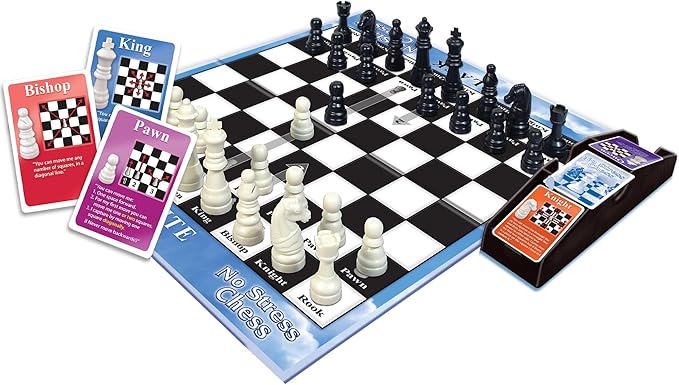
    5. No Stress Chess by Winning Moves Games USA

    The No Stress Chess set by Winning Moves Games USA is the ideal gift for beginner chess players. This set removes the stress from learning how to play chess and remembering all the rules with its unique and helpful queues.

    On one side of the board, you’ll find piece names and arrows indicating how each piece moves. When you’ve mastered these concepts, flip to the other side of the board for a more challenging experience without the guides. A set of cards with visual diagrams showing how each piece moves is also included with the set.

    Get this on Amazon

    4. Talking Chess Acadamy II, AI Voice Coach Chess Set

    The future is here. No need for a chess coach or even an opponent with this AI-powered chess board. The optional chess coach will speak with you as you play, responding to your moves and providing tips as you go.

    With training puzzles, grandmaster games, and an adjustable difficulty level from 800-2200+ Elo-based strength, this set is helping everyone, from beginners to experts, improve at chess.

    Get this on Amazon

    3. Chess Made Simple, Spin Master Games

    The Chess Made Simple set by Spin Master Games features a detailed chess board with helpful labeling. Players will find helpful queues for where pieces go and how they move on the set itself.

    Along with the labeling, the set comes with learning cards featuring the rules, helpful tips, and descriptions of how each piece moves.

    Get this on Amazon

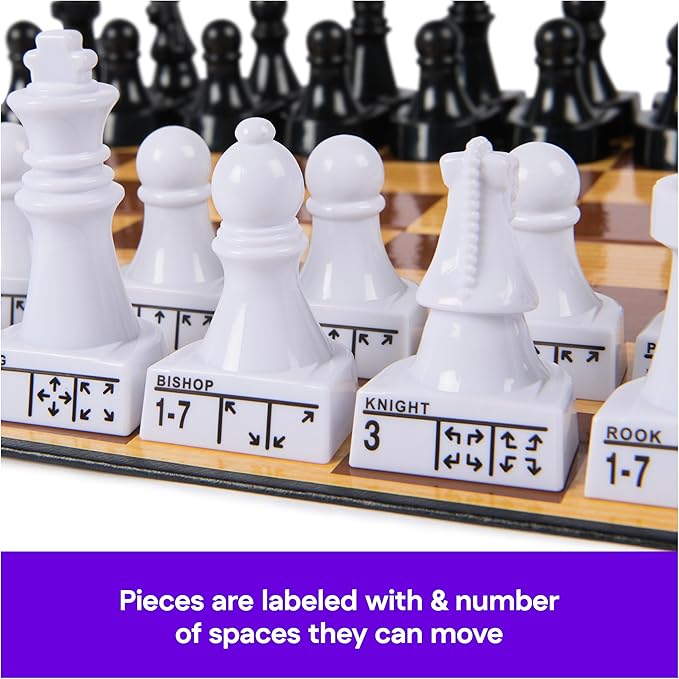
    2. Chess Teacher: A Set for Learners by Spin Master Games

    The Chess Teacher set is specifically designed for beginners and/or regular players who just can’t seem to remember how the knight moves. Each piece features a large label showing which direction it moves and how many spaces.

    Get this on Amazon

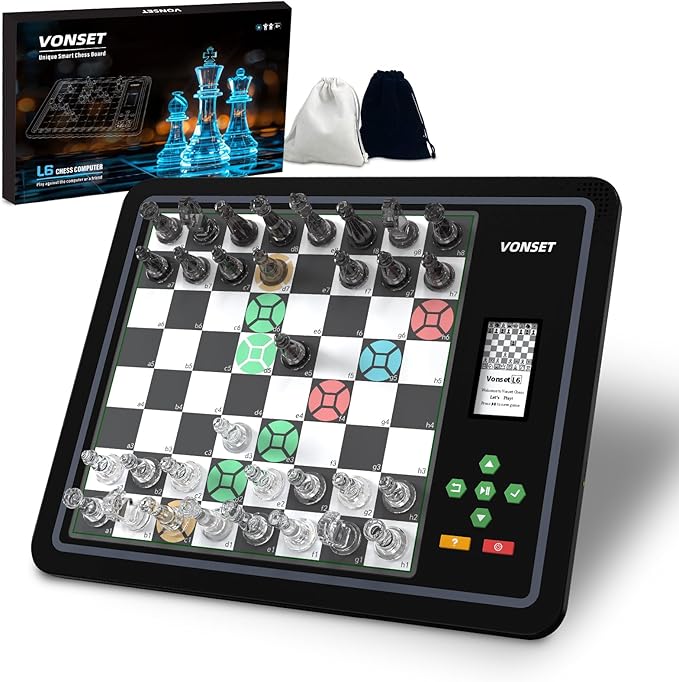
    1. Unique Smart Chess Board by Vonset

    Rounding out the best chess boards for beginners, we have the Unique Smart Chess Board by Vonset. This chess set makes the perfect gift for the dedicated chess beginner in your life. Light up features allow users to play and improve solo against a chess computer.

    The engaging experience of this light-up chess set make it the perfect set for beginners. Not only will they get to learn as they play, with training modes and puzzles available, but they’ll have fun doing it.

    Get this on Amazon

    While it can be difficult to get started, chess is a highly rewarding, fun and cognitively beneficial hobby in the long run. Whether you’re shopping for you or a loved one, these beginner chess boards will set you up for success in your chess endeavors.

    Shop these unique and helpful chess sets today.

    • The only 3 chess openings a beginner needs

      The only 3 chess openings a beginner needs

      The Only 3 Chess Openings a Beginner Needs

      A beginner chess player doesn’t need to memorize 20-move sequences of theory. Instead, aim for openings that teach you the fundamentals: developing your pieces, controlling the center, and keeping your king safe, while remaining simple, intuitive, and relatively risk-free from the start.

      In this post, we’ll provide a three-opening repertoire perfect for the beginner: the Stonewall Attack, the King’s Indian Defense, and the French Defense.

      The Stonewall Attack teaches the importance of central space in the opening while providing intuitive development and sharp yet straightforward attacks. Meanwhile, the two Black openings prepare you with forceful replies against White’s two most common opening moves.


      The Stonewall Attack

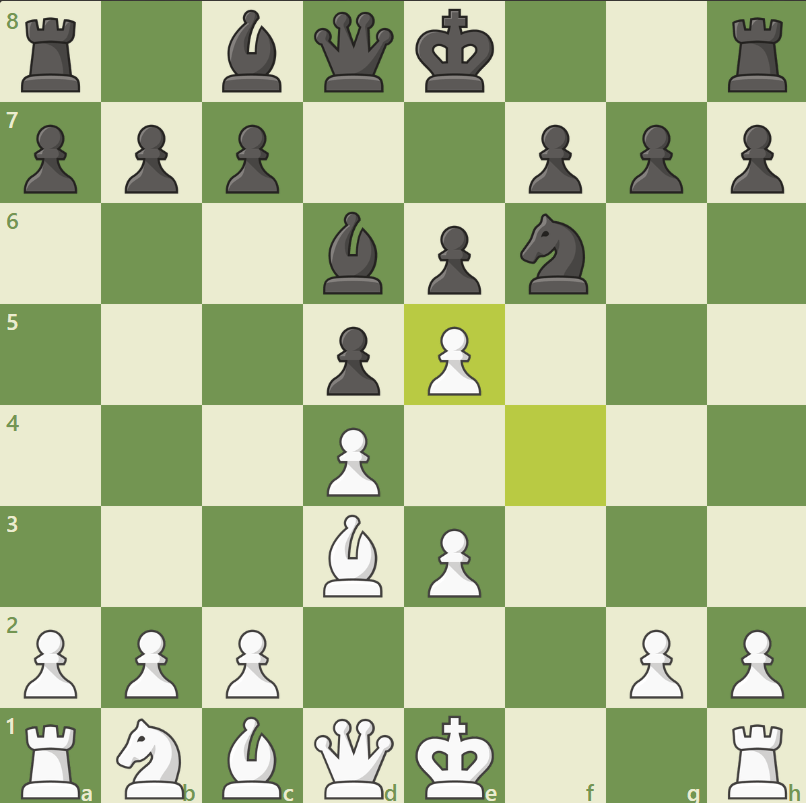
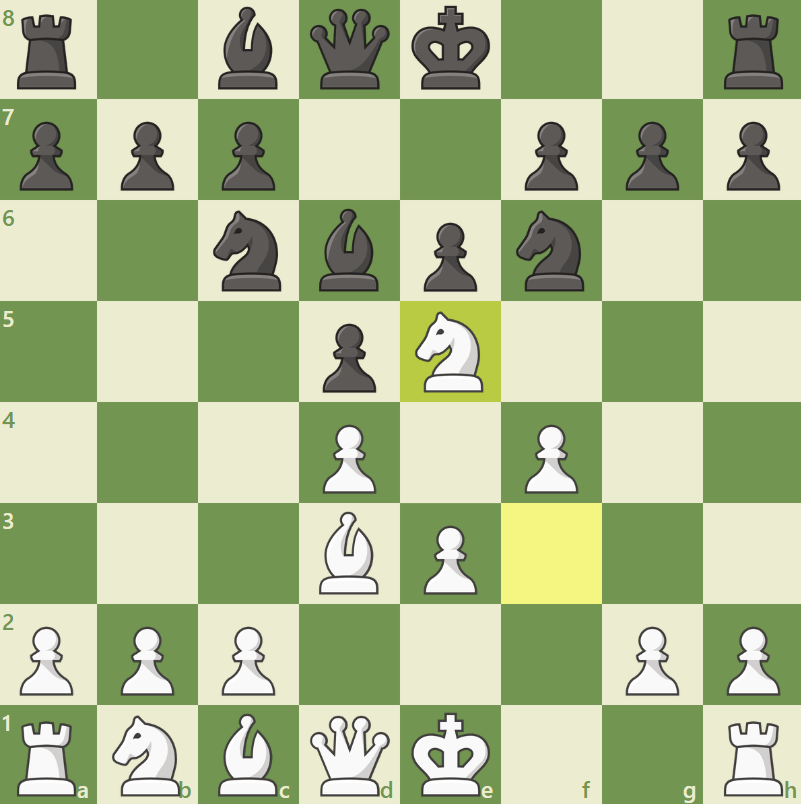
      The Stonewall Attack is excellent beginner-friendly opening. It’s not as popular as the London System with d4, but it shares the same quality of being straightforward and consistent. The Stonewall usually begins:

      1. d4, followed by 2. e3, 3. f4, 4. Nf3, and 5. Bd3.

      The defining feature is the “stonewall” pawn structure: pawns on d4, e3, f4, and c3. This creates a solid wall in the center, giving White lots of control over the dark squares, especially e5, where the knight often enjoys a happy outpost.

      At a beginner level, Black will often trade off the e5 knight early on, sometimes hanging a pawn fork in the process if they take the wrong way.

      The Stonewall is especially useful for beginners because it gives you a clear plan: build the wall, develop behind it, and attack on the kingside. Unlike more theoretical openings, you don’t need to memorize long lines. Understanding the pawn structure and typical piece placements is enough to get started.


      The King’s Indian Defense

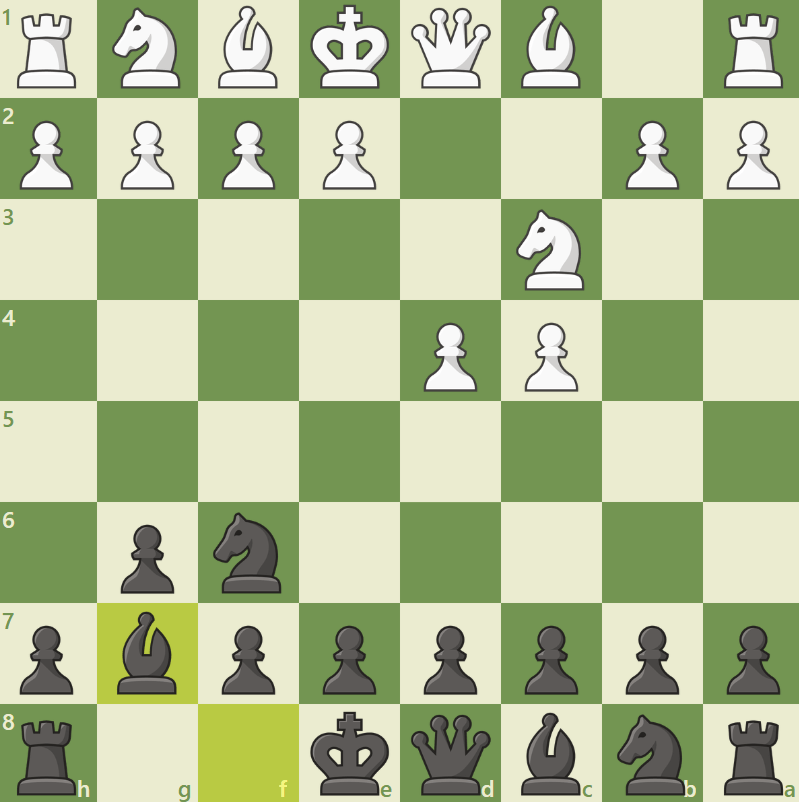
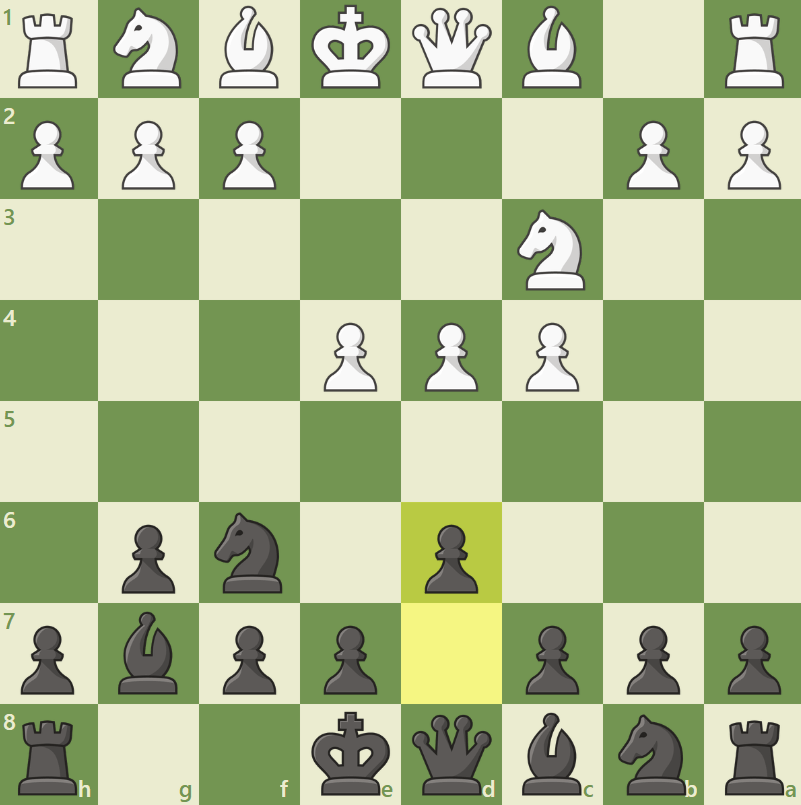
      Now let’s switch to a defensive option for Black. The King’s Indian Defense (KID) is a great choice if you want to meet 1. d4 with something dynamic and aggressive. It starts with:

      1. d4 Nf6
      2. c4 g6
      3. Nc3 Bg7
      4. e4 d6

      Here, Black allows White to build a strong pawn center but plans to counterattack later. The typical pawn structure involves Black playing e5 or c5, while fianchettoing the bishop to g7. The King’s Indian is all about flexibility. You can sit back and then strike at the right moment.

      For beginners, the KID is helpful because it teaches patience and counterplay. You’ll learn that you don’t always have to grab the center immediately. Instead, you can let your opponent take space and then undermine it. It also exposes you early to ideas of pawn breaks, king safety, and sharp middlegame attacks.


      The French Defense

      Against 1. e4, your defensive opening in this repertoire is the French Defense. It begins:

      1. e4 e6
      2. d4 d5

      The French Defense is solid and strategic. Black immediately challenges White’s center with d5. A key feature of the French is the pawn chain: if White plays e5, Black will often respond with c5, attacking the base of White’s pawn structure.

      The French teaches beginners important lessons about pawn structure, particularly how locked centers affect play. In many French positions, play revolves around slow maneuvering, attacking on the wings, and well-timed pawn breaks. This makes it a great opening for developing patience and understanding strategic battles.


      Tips for Learning Openings

      Learning openings can feel daunting, but if you approach them the right way, you’ll improve much faster and avoid wasting time on endless memorization. Here are some practical tips to help you get the most out of your chosen opening.


      1) Watch/Read Content on Your Opening of Choice

      We live in the golden age of chess content. Whether you prefer YouTube videos, Twitch streams, books, or online courses, there are countless resources that break down openings step by step. Watching strong players play your opening can help you understand not only what moves to play, but also why those moves are played.

      Start with beginner-friendly guides. Don’t worry about learning ten different variations right away. Focus on the core setup, the basic plans, and the pawn structures you’ll see over and over again.


      2) Play a Lot Online to Get Familiar with Your Opening

      The fastest way to improve at any opening is to actually play it. Pick an opening, commit to it for a stretch of games, and see how your opponents respond. Online chess platforms like Chess.com and Lichess make it easy to get hundreds of games in, especially at shorter time controls.

      If you’re struggling to figure out which color/opening you enjoy, try playing against a computer first. The computer won’t care if you experiment, and you’ll get a chance to test the waters. After some trial and error, you’ll naturally gravitate toward openings that feel comfortable to you.

      The key is repetition—playing your opening again and again until it becomes second nature.


      3) Learn a Few Variations, but Don’t Worry Too Much About Memorization

      One of the biggest mistakes beginners make is trying to memorize dozens of moves without understanding them. The truth is, most of your opponents won’t follow the main line theory anyway. Instead, you should focus on basic principles:

      • Development: Get your knights and bishops out quickly. Don’t waste time moving the same piece multiple times early unless necessary.
      • Central Space: Try to control the important squares in the middle of the board (d4, d5, e4, e5). The player with more central influence often has more options.
      • King Safety: Don’t forget to castle! Leaving your king in the center too long is a recipe for disaster.

      If you understand these fundamentals, you’ll always have a decent position—even if your opponent takes you “out of book” early. As you gain experience, you can add a few variations and tactical motifs to your knowledge, but keep your focus on the basics.